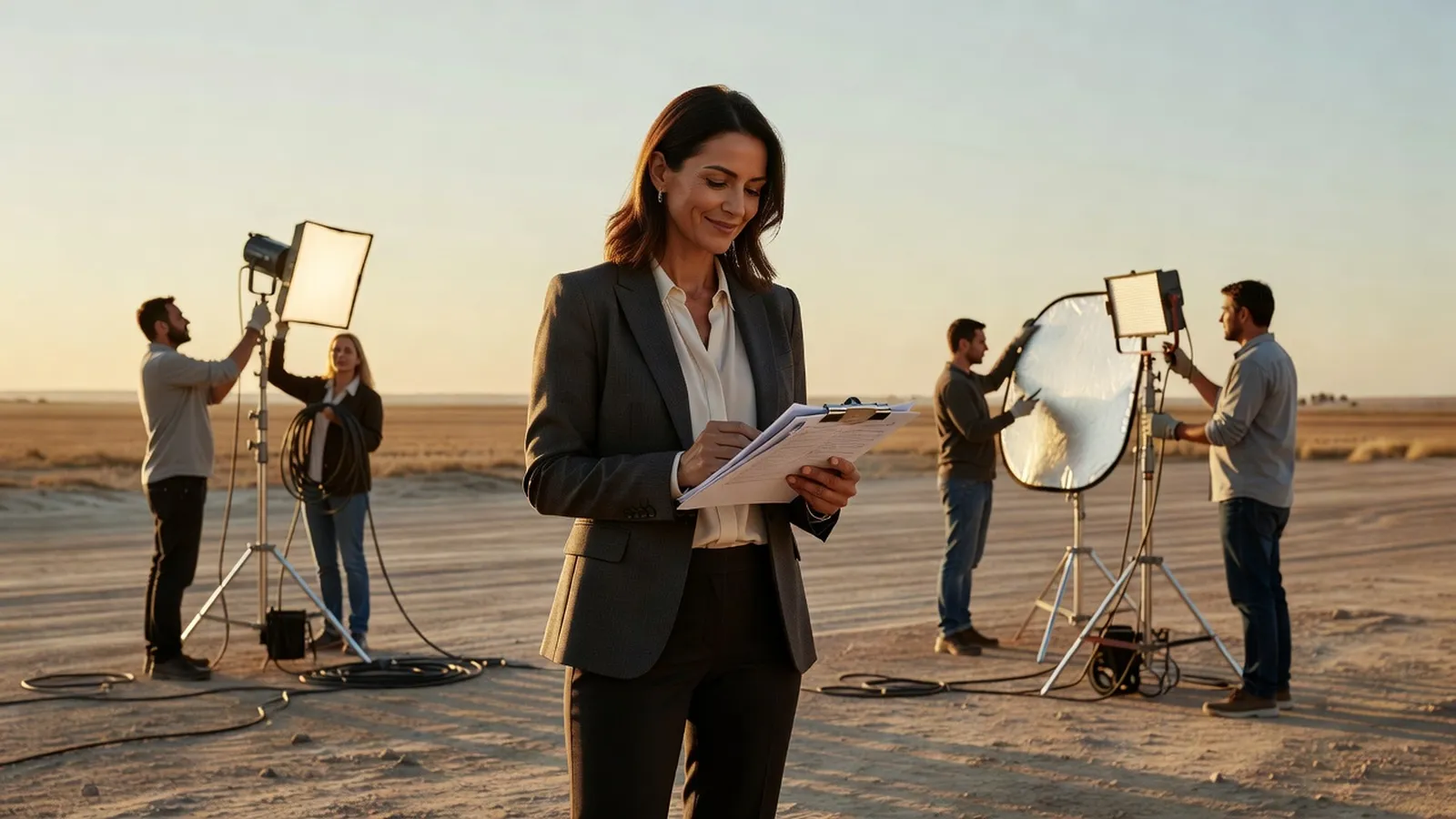
A corporate video starts with a decision about what the audience needs to see, hear or understand. That decision shapes the quote, the script and what the crew records. After filming, the work shifts to editing, revisions and approval before the agreed files are ready to publish. Isabelle Fortin, an independent producer in Montreal and an expert imagined for this guide, explains what she asks the commissioning team to decide at each stage and what she checks before moving on.
Start with the viewing situation, not the shot list
When a request for a video comes in, what do you ask first?
I ask where people will encounter the video and what they should be able to do or explain after watching. “Show people our facility” doesn't tell me whether we're orienting new staff, guiding visitors or showing a space the audience cannot enter. For an orientation, I'd ask which parts of the building new staff tend to confuse. For a visitor route, I'd look at where someone actually has to choose which way to go. Those are different things to put in front of a camera.
I also ask what viewers will have alongside the video. If someone is presenting it in a room, I want to know what that person will explain before pressing play. If viewers will find it on their own, I check which details the video itself has to supply. I ask for any existing instructions, diagrams or photographs, and for the name of someone who can show me the work. Our guide to presenting, training and informing with corporate video can help a team pin down the job before anyone settles on a format.
What should the commissioning team leave the first meeting with?
I want a short written brief people can disagree with while it's still easy to change. It names the audience, the job the video needs to do, what's outside the scope and who can approve it. I include open questions with an owner beside each one. If no one has confirmed access to the proposed location, I want to know who can find out and whether a refusal would change the script or just the setting.
I separate checking the content from authorizing publication. A subject specialist may be able to confirm that a demonstration is accurate without being the person who decides whether it belongs in a public video. I work out when each review needs to happen and who will reconcile the notes. If your team hasn't settled those roles, the corporate and institutional video guide is a useful place to start the discussion before asking for a quote.
The quote is where scope becomes concrete
If the quote is above the available budget, what can you cut and what would you protect?
I look for work we can take out entirely rather than squeezing every scene into a tighter schedule. If we're moving the crew just to give the interviews different backgrounds, I ask whether we can stay put. If an interview and a demonstration both make the same point, I check which one the audience actually needs. Cutting a scene leaves room to listen to the answers, check the framing and repeat a take when something isn't clear.
I protect whatever the audience needs to understand the material. If the interview carries the story, I won't trade usable sound for another backdrop. If a demonstration depends on seeing where someone's hand goes, the close view stays in the plan. I put accessible versions in the quote when they're part of the commission, along with who will review them. I also spell out assumptions about scouting, interview preparation, alternate cuts and revisions. “Includes revisions” isn't much help if we haven't agreed on who sends the notes or what counts as a change in scope.
Here's how I might divide decisions on a project. I adjust the roles to suit the people doing the work, but I keep a record of what each decision produces.
| Stage | Who decides | Deliverable or decision record |
|---|---|---|
| Brief | The commissioning team confirms the intended use; I write up the scope | Approved brief |
| Quote | The commissioning team selects what to include | Quote with working assumptions |
| Pre-production | I settle the plan with the content and location leads | Working script and shooting plan |
| Shoot | The director and producer make on-set decisions within the agreed scope | Picture, sound and shoot notes |
| Edit | The designated approver consolidates feedback and signs off | Approved cut |
| Delivery | I prepare the package; the publishing lead confirms it suits the intended use | Final files and delivery list |
If someone asks for another version, I check whether they need another export of the approved edit or a different cut for a different audience. A new cut might need rewritten titles, fresh caption timing and another approval. I explain which work would change before I start. The commissioning team can then expand the scope or give up something it needs less.
Pre-production: turn the script into a shootable plan
How do you know whether a script will work at the location?
I mark up the script for things we have to record, not just things we'd like to say. “Show how the equipment is prepared” is a useful instruction for a writer, but I can't hand it to a camera operator as a shot. I need to know which action tells the story, who can perform it and where the crew can stand without getting in the way. For interviews, I prepare open questions and follow-ups. If a process has to be described accurately, I check the details with the person who knows it rather than asking an interview subject to memorize a polished answer.
At the scout, I try to picture the room at the time we'll actually use it. A quiet space on a walk-through might sit next to active equipment on shoot day. I ask who will be passing through, what we can move and where the crew can wait without blocking anyone. I follow the route from the entrance to the filming area with the equipment in mind. If the room turns out to be a poor place for an interview, I want an alternative before the schedule goes out.
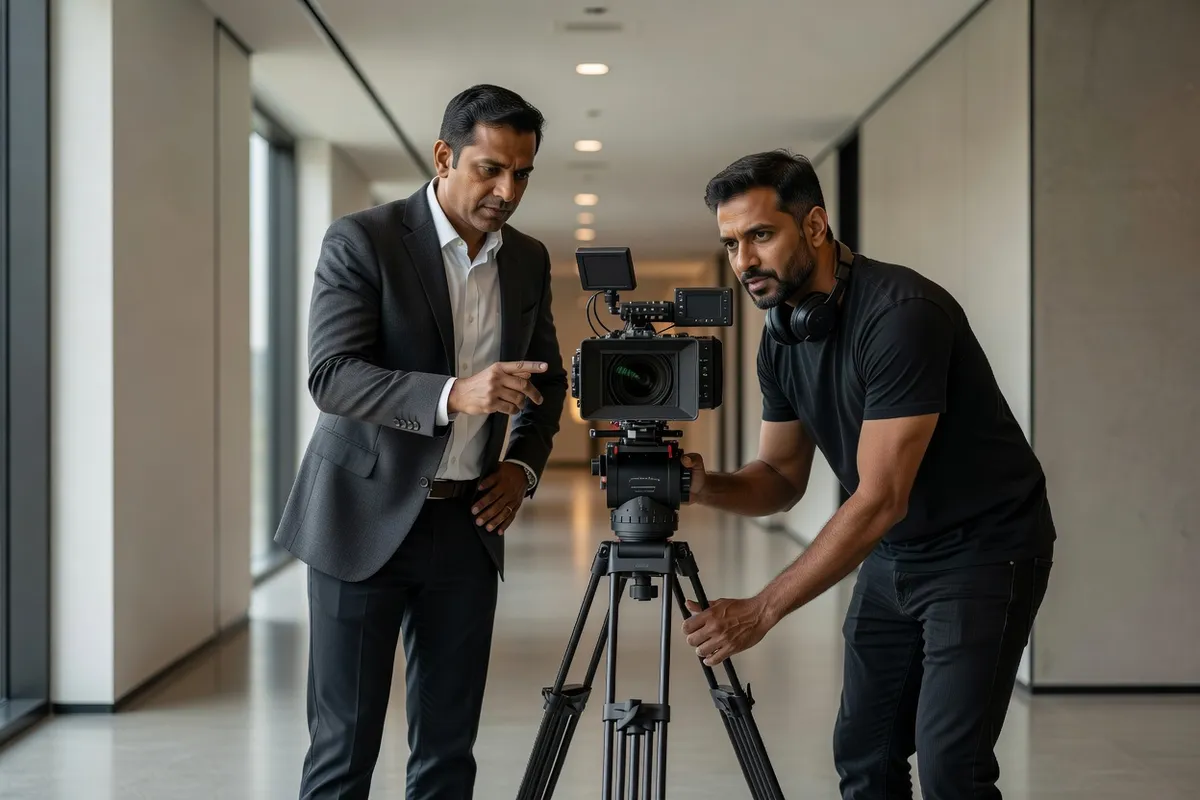
I keep permission to use a room separate from arrangements with the people we want to film and permissions for material we plan to include in the edit. A building contact can confirm access without speaking for everyone who works there. I also ask what needs to stay out of frame: a board, a stack of files or a screen someone needs to keep using. I'd rather select a different angle or move the interview than promise to remove something later. If the action can't be filmed clearly, the guide to animation, shooting and post-production offers other ways to think about putting it on screen.
Once I share the plan, I check whether people can find the instructions intended for them. Someone appearing on camera needs a place to go and a clear idea of what they'll be asked to do. The crew needs to know which scenes depend on which rooms and people. The site contact needs to see when we'll need help getting in or setting up. I pull unresolved items out of the general notes so no one reads a tentative arrangement as a confirmed one.
Shoot day: check the plan against the room
What do you do before the camera rolls?
I check in with the site contact and confirm what's changed. The camera crew can start working out the frame while the sound recordist listens to the space. Before an interview, I explain what we'll do with the recording and how the session will run. I tell the person they can pause or ask to try an answer again. That gives them a better idea of what to expect than seating them, clipping on a microphone and starting with the hardest question.
I check permissions ahead of time and revisit them if the proposed use changes. The Civil Code of Québec protects privacy and identifies using someone's image or voice for a purpose other than the legitimate information of the public as a possible invasion of privacy. For consent to use personal information, Quebec's Commission d'accès à l'information says, among other things, that consent must be freely given, informed and specific to each purpose, and distinct when sought in writing. In practice, I don't take agreement to appear in an internal video as permission to put the same footage in a public cut.
What happens when the planned scene is no longer possible?
I ask what the disruption takes away from the edit. If a room gets noisy, I can move ahead with footage that doesn't need dialogue while someone checks another interview spot. If the person who knows how to demonstrate a task isn't available, I won't ask someone else to bluff their way through it. I'll look at moving the scene or showing the verified steps another way. I check with whoever is responsible for the content before making a substitution that changes the instruction.
Before someone leaves or we take down a setup, I review the material the edit depends on. I listen for the end of the answer and look at whether the decisive part of the action is visible. If we've changed the plan, I leave a note explaining which takes cover the original purpose and what we couldn't get. That saves the editor from searching through good footage for a shot that was never recorded.
Editing: ask for the decision the cut is ready for
How do you run revision rounds without having the team review the same thing twice?
I tell people what I'm asking them to judge. On an early cut, I want to know whether the sequence makes sense, whether an explanation comes too late and whether the content is accurate. I label temporary elements so the team doesn't spend its review discussing a colour adjustment or a sound mix I haven't done. I do ask for names, titles and sensitive wording to be checked early enough that a correction won't hold up the delivery package.
I ask the designated contact to send a consolidated set of notes. If different reviewers want opposite changes, I ask the contact to resolve the disagreement rather than choosing the easier edit. A note I can work with tells me:
- Where to look, using a time reference or a line of dialogue.
- What's not working, such as a hand blocking the part viewers need to see.
- What the audience should be able to see, hear or understand after the change.
- Which instruction to follow if another reviewer has asked for something incompatible.
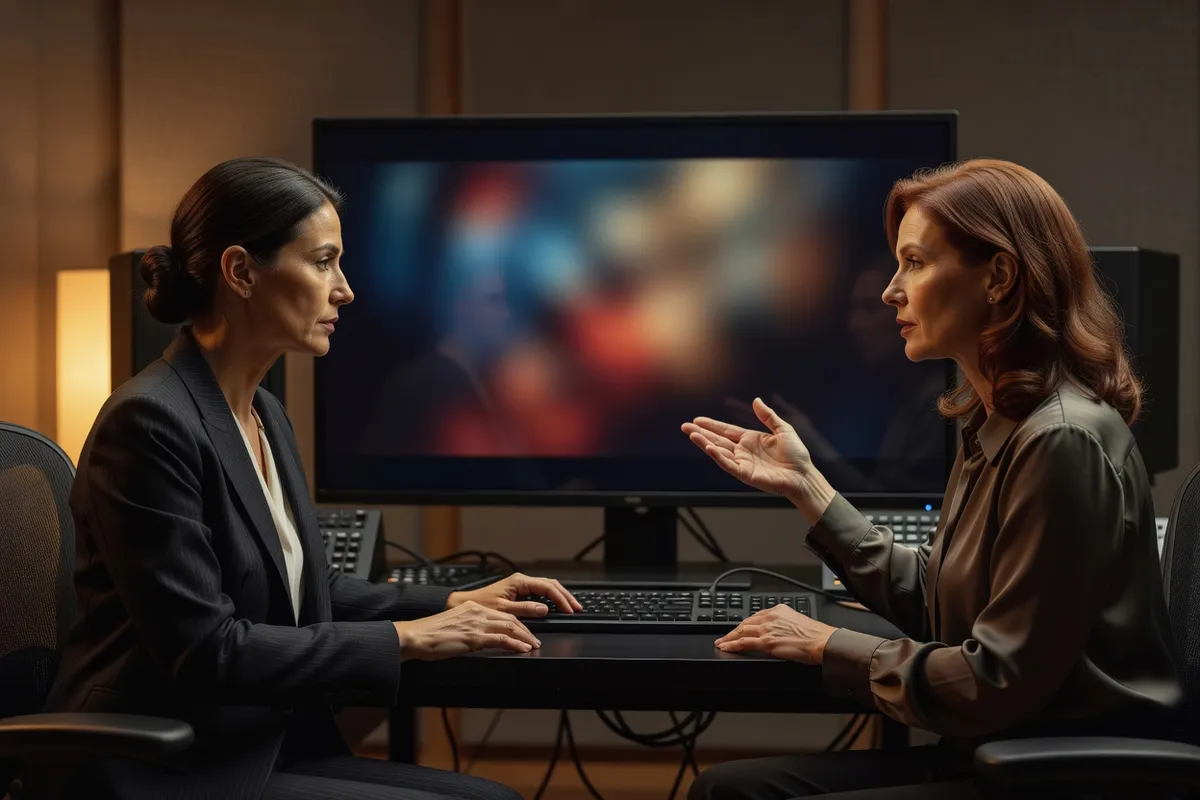
I get approval on an identifiable version before making the deliverables that depend on it. Moving a scene after captions are timed means checking the captions against the new cut, not simply sending the old file with a new name. I also distinguish a correction from a change to the approved direction. Fixing a misspelled name is one thing. Adding a message that requires a different sequence or a return to the location calls for a conversation about scope before I send the edit back to work.
Delivery: hand over a package someone can use
What belongs in the package besides the main video?
I confirm with the publishing lead where each version goes, how it should be framed, which languages are included and how the captions will be available. Then I check the exported files rather than relying on how the edit looked in the workspace. A title that fits the main version may need a different position in a tighter crop. I name the files so the recipient can tell the versions apart without opening them, and I list which file goes with which use.
The federal accessibility guidance for audio and video explains that video with audio requires captions that keep pace with the soundtrack and convey its content, including relevant speaker identification and important sounds. Those captions also need to be easy to access. A transcript is a separate text equivalent. Along with dialogue, narration and important sounds, it includes text shown on screen, significant actions and any audio description provided. I check both against the approved video. If an instruction only appears on a title card, copying out the interview won't capture it.
If the viewer needs information that's only visible, I ask whether we can build it into the narration at the writing stage or should plan for video description. Revenu Québec identifies video description as a cost that may qualify under its film production services tax credit. That doesn't tell me whether a particular expense or project qualifies. I plan for the accessible deliverable on its own merits rather than assuming a credit will cover the work.
How do you handle source files, archiving and the right to reuse material?
I treat delivery, retention and permission as separate conversations. A finished video is what the publishing lead needs today. If the team wants to be able to replace a title or recut an interview later, I ask what materials that work would require and spell out whether the original recordings or editing project are included. I also agree on what I'll keep, for how long and what the team should check before it relies on being able to retrieve an archived element.
I don't read a file handoff as a transfer of copyright. Under the Copyright Act, an assignment or a licence of copyright is valid only if it is in writing and signed by the rights holder. An assignment doesn't by itself waive moral rights. I ask the commissioning team to describe what it wants to do beyond the initial release: revise the edit, publish it somewhere else or lift a passage for a future video. If our agreements don't clearly cover an intended use, I have it checked before I promise it.
Before you call: bring the problem, not a finished script
What do you wish commissioning teams knew before they contacted you?
I don't need a screenplay. I need to know why the existing way of explaining something isn't working. If the material lives in a document, show me where people stop and ask for help. Is there a gesture that a paragraph can't make clear? Or do readers just need to find a specific instruction without searching through a long file? Those problems point to different work. The guide to deciding when to replace a PDF with video can help you identify what to demonstrate and what to keep available as a written reference.
Bring the restrictions you already know, too. If a space is available only around an operation that cannot stop, I need to plan around that. If the approver isn't easy to reach, I need to know which decisions require their attention before we book the shoot. It's fine to come with unanswered questions. I can quote on stated assumptions, provided we both know which ones still need to be checked and what we'll do if they turn out to be wrong.
Before the call, try finishing this sentence: “People will watch this when ___, and afterwards they should be able to ___.” Ask the colleagues who will review the video to finish it independently. If they describe different jobs for the same video, bring their answers to the meeting. We can choose which job to plan and quote for before we commit to filming scenes that pull the edit in different directions.